
From Festivals to Flourishing: What 35,000 Shared Moments Tell Us About Community Wellbeing
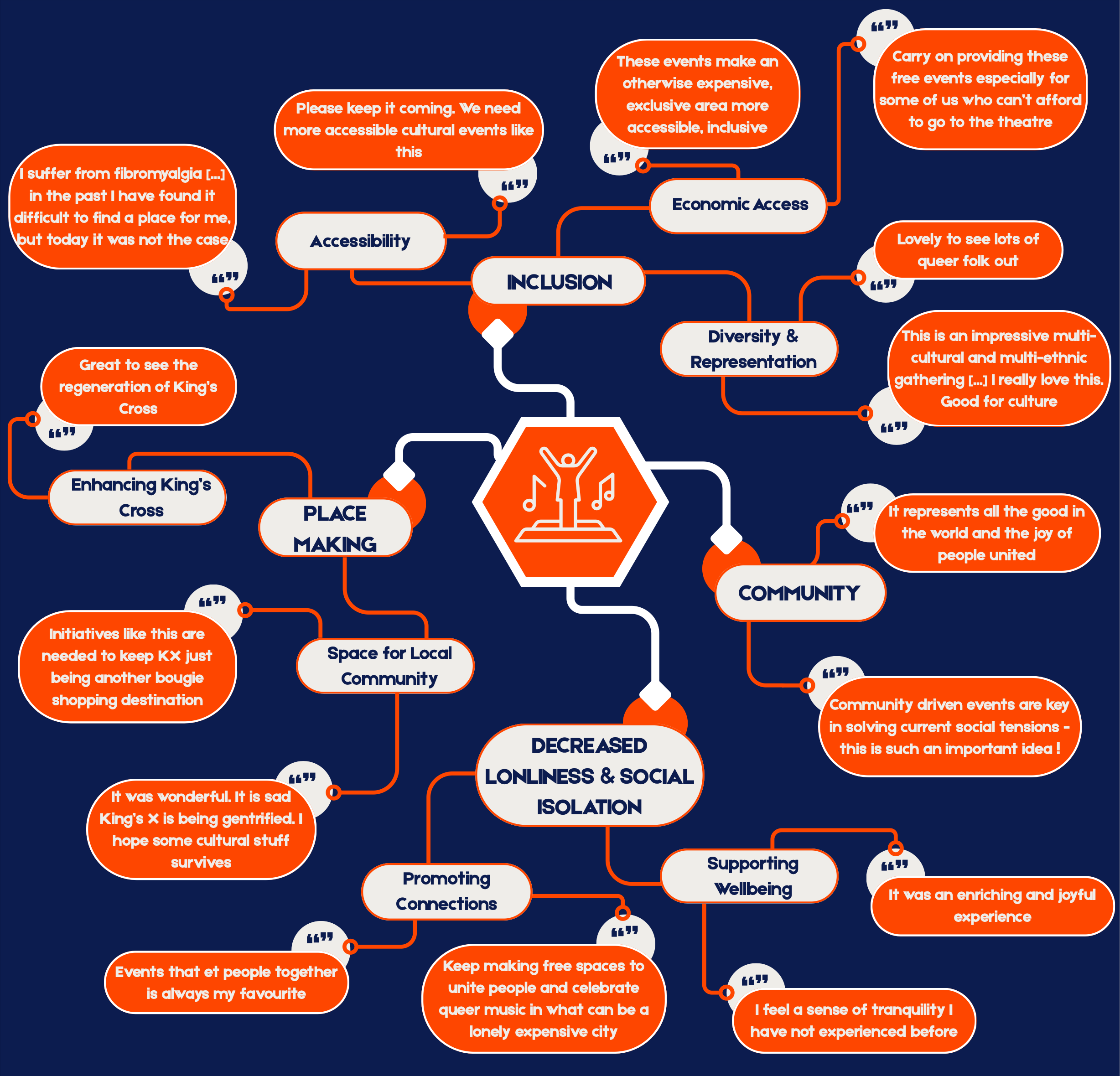
Infographic about King’s Cross Summer Sounds by Professor Angela Pickard (Phd): Sydney De Haan Research Centre for Arts and Health, Canterbury Christ Church University.
That end-of-year feeling has a particular texture: half reflection, half anticipation. The emails slow down. The phone stops ringing. The to-do list is still long, but for a moment we can zoom out and ask a better question than “what’s next?”
We can ask: what did we make possible and what did it mean for the wellbeing of the communities we serve?
In 2025, we delivered 14 free festivals and welcomed over 35,000 people. We also laid the foundations for a new flagship event St Osyth Summer Sounds, our Music and Food Festival, which we’re building with a clear ambition to become the largest free music and food festival in Essex in 2026.
Those are the headline numbers and the headline goals. But if we’re honest, the truest measure of our year isn’t just the scale of what happened it’s the quality of what those moments created connection, belonging, pride and joy. In other words, wellbeing.
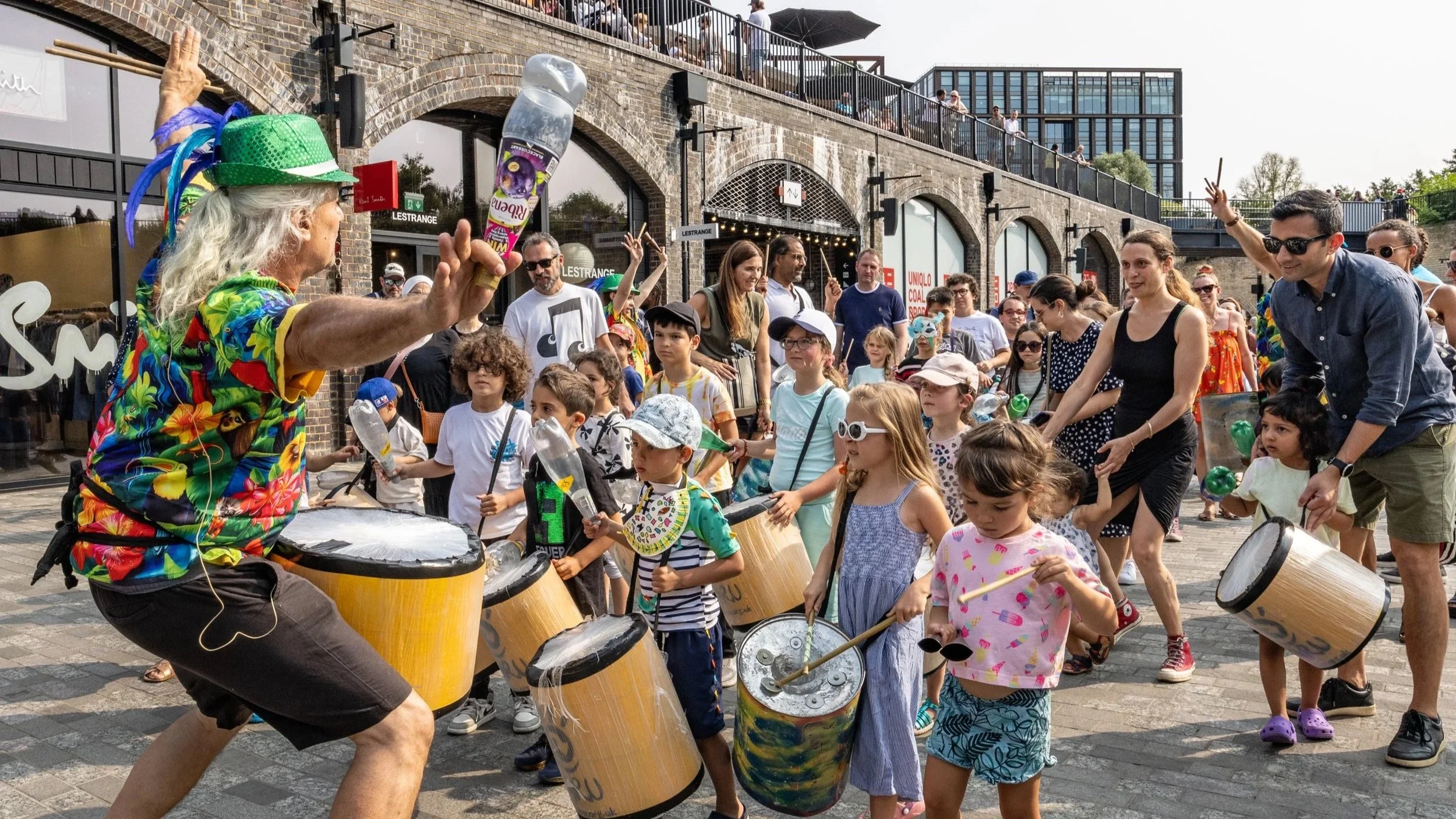
Taru Arts @ King’s Cross Summer Sounds. Photo © John Sturrock
Free, local festivals aren’t ‘nice-to-haves’, They are social infrastructure.
When a festival is free and rooted in place, it does something quietly powerful. It lowers the barriers that often keep people apart. It invites people who don’t always feel invited. It makes a shared space feel safe, welcoming and worth stepping into.
Research consistently backs this up. Festivals are not only entertainment, they are platforms for social interaction, shared activities that create collective experience and strengthen social cohesion. Participation itself builds attachment and relationships that become part of a community’s social capital.
We saw that in 2025 in the simplest ways:
strangers holding places in the crowd for one another
grandparents, parents and children sharing the same space without pressure to spend
local artists being cheered on by neighbours who didn’t know they were artists
volunteers becoming familiar faces, then friends
community groups meeting ‘in real life’, not just online
Those aren’t sentimental anecdotes. They’re signals. They tell us that connection is a public good and festivals can generate it at scale.
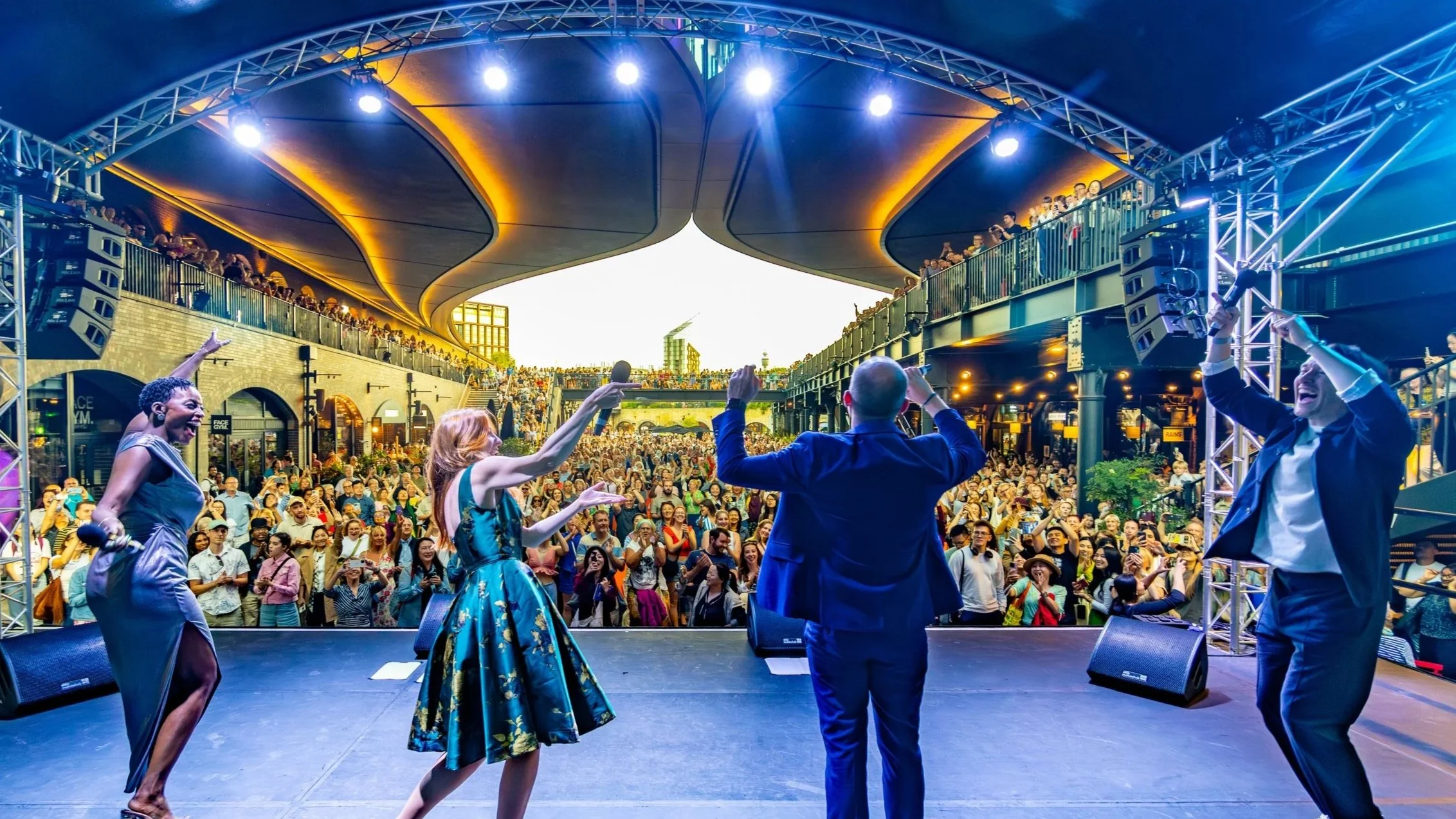
Musical Theatre @ King’s Cross Summer Sounds, in partnership with Kings Cross Group. Photo © John Sturrock)
The wellbeing impact starts with social connection: bridging and bonding
Community wellbeing is not only about individual happiness; it’s also about the strength of our relationships.
A useful lens from the research is the difference between:
Bonding social capital: deepening ties among people who share something in common
Bridging social capital: building connections across difference age, background, neighbourhood, culture and income
Community festivals can create both. They become the rare kind of space where you can run into someone you know and meet someone you didn’t expect to meet. Studies suggest that festivals offer opportunities for these connections to grow, reinforcing a more integrated community structure (Adha et al., 2018).
That matters because the opposite is also true. When communities fragment, loneliness rises, trust falls and people withdraw from shared life. A free festival pulls in the other direction. It creates a low-pressure environment where social contact is normal and belonging is shared.
If you want one of our clearest lessons from 2025, it’s this:
The ‘festival’ is the visible outcome. The invisible outcome is a stronger social fabric.
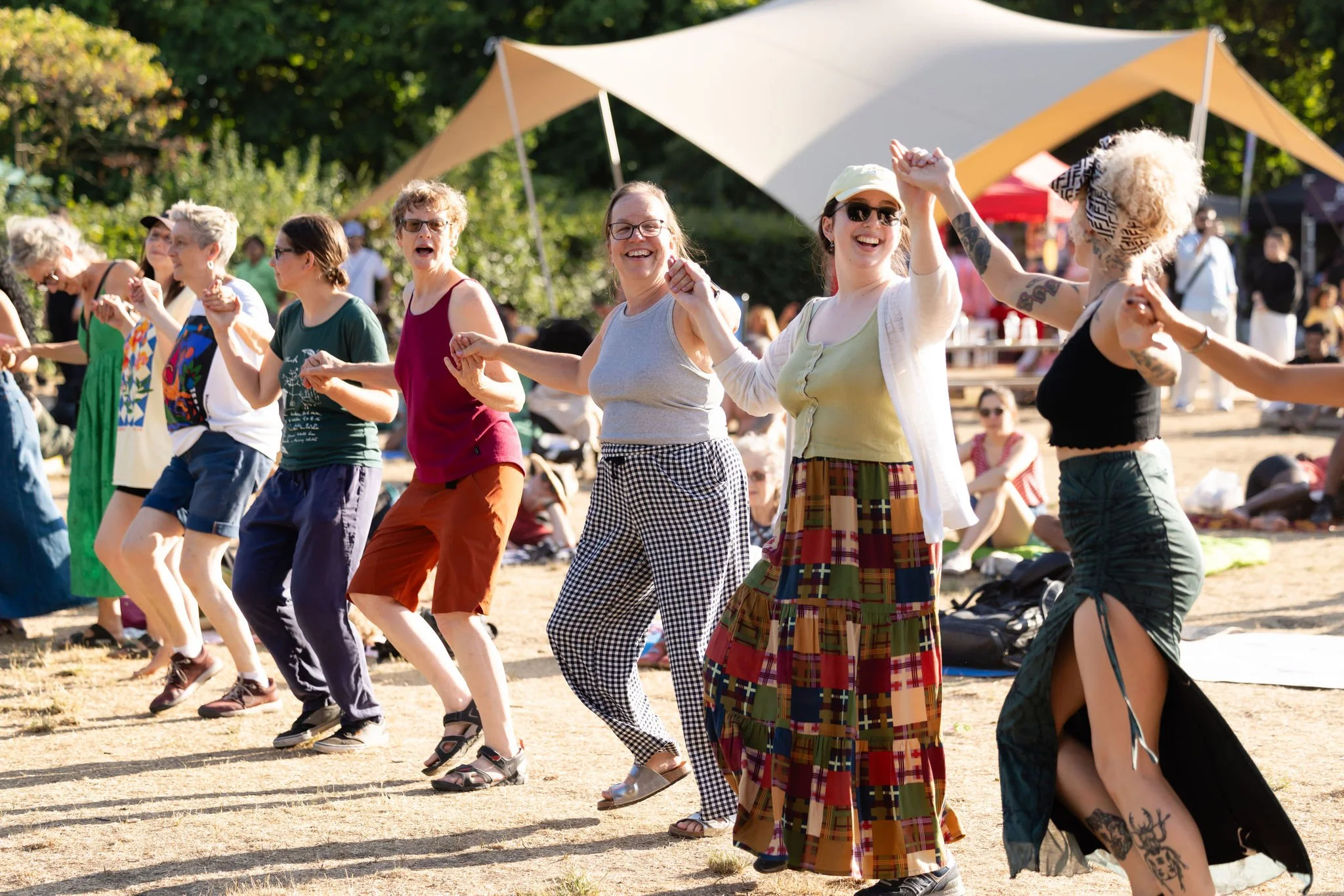
Community Dancing @ Summer in the Park: Greenwich Park, in partnership with The Royal Parks. Photo © Roswitha Chesher
Festivals also help people settle in: belonging isn’t automatic
Communities are not static. People move. Circumstances change. New families arrive. Young people look for ways to feel part of something. Others can live in a town for years and still feel like outsiders.
Research highlights that local festivals can function as spaces where newcomers, including migrants, form social ties that support settlement and integration (Wessendorf & Phillimore, 2018). As these events celebrate local culture and shared experience, they can create a sense of recognition and belonging (Mak et al., 2023).
We believe that belonging is built, not assumed. And building it requires repeated, open, welcoming moments. Exactly what community festivals are designed to deliver.
Pride of place: when culture turns ‘where we live’ into ‘who we are’
There’s a phrase that comes up often in community development: pride of place. It can sound abstract until you see it.
You see it when people say, “I didn’t realise we could do something like this here.”
You hear it when local performers are celebrated like headline acts.
You feel it when a public space becomes a shared front room for the day.
Evidence suggests festivals strengthen local identity by celebrating shared heritage and culture, which in turn cultivates belonging and community identity (Banga et al., 2021). When people feel connected to their place, they’re more likely to care for it, its environment, its heritage and its future (Bolton et al., 2015). Places with a strong sense of identity and cultural assets often build greater social capital, becoming not just more attractive, but more socially inviting (Mak et al., 2023).
This is why we take ‘free’ seriously. Because access is not a side issue, it’s central to pride. If a community event is financially out of reach for a portion of the community, then pride becomes something some people get to feel and others don’t. This is a lesson we learn this year, with St Osyth Summer Sounds.
Our approach in 2025 reinforced a principle we’re carrying into 2026, if we want a place to thrive, people have to be able to participate in it.
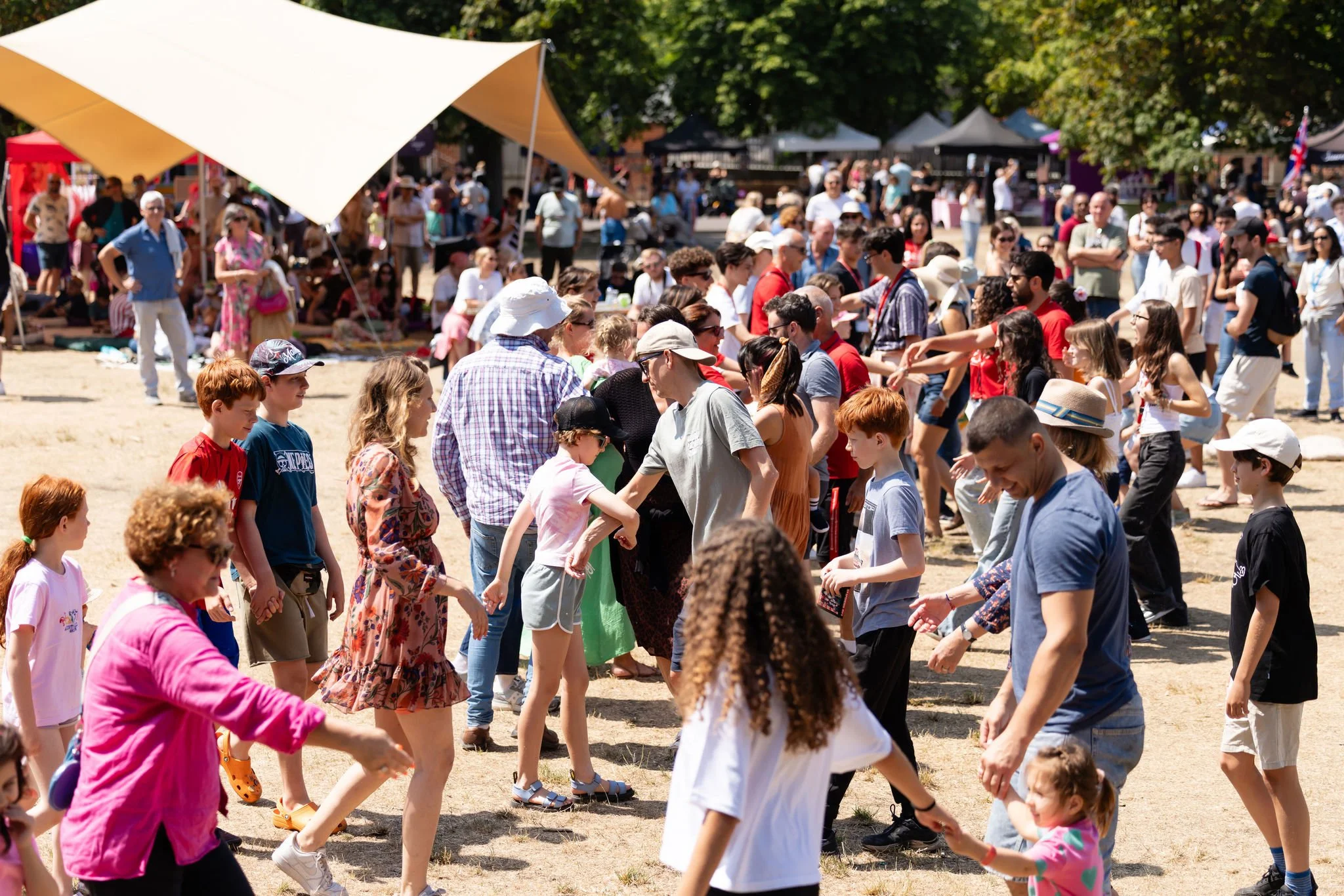
Community Dancing @ Summer in the Park: Greenwich Park, in partnership with The Royal Parks. Photo © Roswitha Chesher
Creative wellbeing: shared joy is not trivial—it’s restorative
There is a kind of wellbeing that doesn’t come from being told what to do, but from being invited to join in. It comes from music, movement, laughter, making, tasting, learning and being part of something larger than yourself.
Festivals have symbolic and emotional dimensions that can strengthen bonds and collective identity (Adha et al., 2018). There’s also emerging evidence that creative expression can promote wellbeing and reduce feelings of isolation and alienation, strengthening the social fabric (Ganga et al., 2024).
This resonates with what we’ve witnessed firsthand: festivals are often places where people feel lighter, more open, more connected. That doesn’t replace clinical support or structured services, but it can be a meaningful protective factor. A ‘good day out’ can also be a day where someone remembers they are not alone.
St Osyth Summer Sounds: building a flagship that stays rooted
If 2025 was a year of delivery and learning, then 2026 is a year of consolidation and elevation.
St Osyth Summer Sounds is not just a new date in the diary (18th & 19th July 2026). It’s an opportunity to demonstrate what a major free event can do when it’s built intentionally, around community wellbeing, local pride and inclusive access.
Our ambition to make it the largest free music and food festival in Essex in 2026 isn’t about scale for its own sake. It’s about what scale can unlock:
more spaces for local talent to be celebrated
more opportunities for local traders and food producers to thrive
more reasons for families and friends to gather without financial pressure
more moments of pride that ripple beyond a single weekend
more partnership opportunities across culture, health, education and community sectors
We are building the foundations now because we want this festival to be sustainable, responsible and genuinely of its community not imported, not extractive, not “done to” a place, but made with it.
We also want to shine a light on the extraordinary commitment of St Osyth Priory, not simply as a venue, but as a true partner in what we’re building. Their generosity in providing this remarkable heritage space free of charge is matched by how actively they show up. They’re hands-on in the planning, they bring insight and care at every step, and crucially they share a long-term, 10-year vision with us for what St Osyth Summer Sounds can become. Just as importantly, the Priory team helps anchor the festival in the place it belongs, connecting us to local voices, relationships and realities so the event feels authentically of the community, not parachuted in. It’s a powerful example of what’s possible when a local charity like Arts Trust and a heritage site like St Osyth Priory work side by side with ambition, openness and authenticity to create something genuinely beautiful for local residents and the wider Tendring community alike.
What we’ll carry forward into 2026
As a charity, we’re ending the year with clarity about what works and what we need to deepen.
Here’s what we’re committing to going forward:
Designing for connection, not just attendance
Programming that encourages interaction participation, shared moments, community-led activity, rather than only passive consumption.Protecting access as a core wellbeing principle
Free entry is not simply a pricing choice, it’s an inclusion strategy.Strengthening local identity through local voices
More pathways for local artists, local stories, local food and local groups to be visible and valued.Measuring what matters
We’ll keep improving how we capture outcomes like belonging, pride and connection. Not just footfall.Building partnerships that extend impact
Community wellbeing is shared work. Our festivals can be meeting points for many organisations and initiatives that care about the same outcomes.
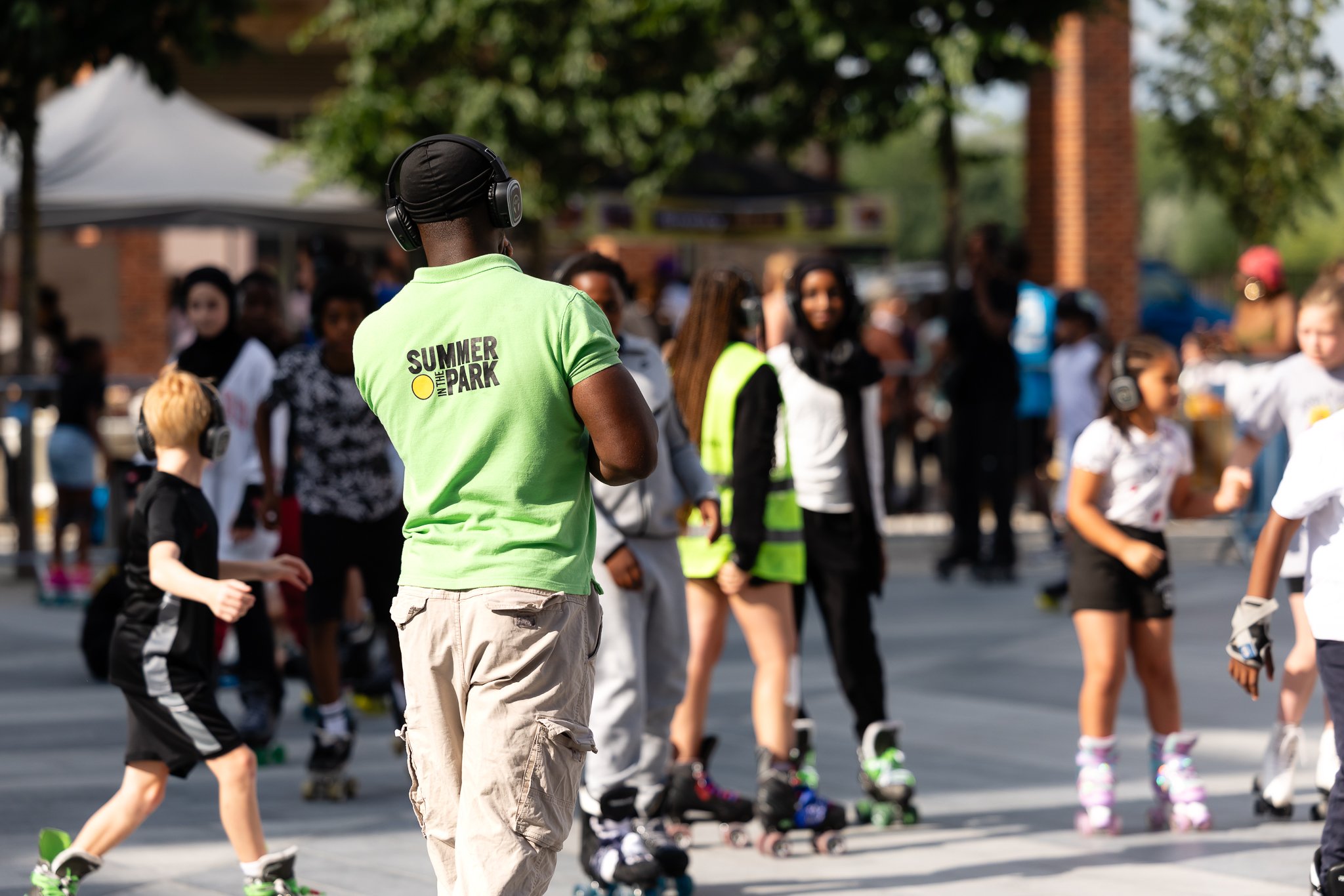
SkateJam and Food Festival, as part of Summer in the Park @ The Nest Thamesmead, in partnership with Vibes-on-Vibes and Peabody. Photo (courtesy) Roswitha Chesher
A closing reflection, and an open invitation
As we shut down our laptops and lock the office door for the year, we’re thinking about something simple:
35,000 people chose to show up to something free, local and shared last year.
That’s not just a statistic. It’s evidence of appetite for community, for culture, for belonging and for joy.
If you came to a festival this year: thank you for bringing your energy, your presence, your generosity and your curiosity.
If you volunteered, performed, traded, partnered, stewarded, cleaned up, supported behind the scenes - thank you for making the invisible work visible through what it created.
And if you want to be part of what comes next, especially as we build toward St Osyth Summer Sounds in 2026, we’d love to hear from you. Because the future we’re aiming for is not only bigger, it’s one where our communities are more connected.
We also want to take a moment to recognise how exceptional our funders this year have been (Peabody, The Royal Parks, Royal Borough of Greenwich, Arts Council England, Tendring District Council, UKSPF, Essex Community Foundation, Go London!, Garfield Weston Foundation), but especially the National Lottery Community Fund, who have been so understanding in what sits beneath the surface of community festivals. They’re not simply days out, but a form of social infrastructure (Social & Cultural Capital) that strengthens connection, belonging and pride of place. Over the past three years, their support for Summer in the Park (our joint programme with Greenwich Dance) has helped ensure free, high-quality cultural experiences remain genuinely accessible to local communities of Greenwich, Belxley and St Osyth, Essex, and has backed the kind of steady, trust-based work that builds community wellbeing over time. And as we look ahead, their commitment to fund St Osyth Summer Sounds for the next three years is more than an investment in an event and on going community engagement; it’s a vote of confidence in the long-term value of bringing people together around music, food and shared local identity. This long term commitment is helping us plan with ambition, build sustainably and deepen impact year on year.
Thank you
Dr Martin Collins